
Eruma Vetti Palayam is a small village situated at the banks of Kusasthalai river near Gnayiru past Red Hills area in Chennai.
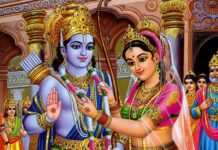
As per the legend, it is believed that Bhagwan Sri Ram and Sri Seetha Devi were camping in this area during their vanvas days. One day, when Sri Devi was trying to bathe in the river, a demon took the form of Mahisha (Buffalo called as Erumai in Tamil) and attacked Her. Sri Seetha Devi ran and sat on the left lap of Sri Ram seeking refuge from the demon.
The Mahishasur had an earlier boon whereby only women could diminish him. Knowing this, Sri Ram had kept four Dharba grass strands on the four sides. The Dharba grasses then took the form of Sri Angala Parameswari Amman, Sri Ponni Amman, Sri Moolakkal Amman and Sri Ketha Amman and then the four of them together diminished the Mahishasur.
The place is also called as Mahishasura Mardhanam.
The village has two prominent and ancient temples which are believed to be atleast 2000 years old.
Sri Varamuktheswarar Temple
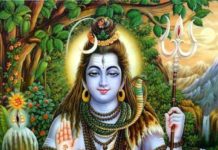
This temple is ascribed to the worship of Bhagwan Shiva who is hailed as Sri Varamuktheswarar. Mukthi means salvation. Praying to and worshipping Bhagwan Shiv at this temple is believed to bestow salvation. It is also believed that the ill effects of karma are being minimized here.
It is believed that this temple was built during Pallava era.
The temple was in much dilapidated condition and it is said that for a period of 45 years, there was no worship in this place. Only in the year 2010, some Devotees stumbled on this temple structure and efforts were made to renovate the temple through funds collected from the devotees. The renovation could be done only after a period of 15 years. Kumbabhishekam and Samprokshanam were done in January 2026.
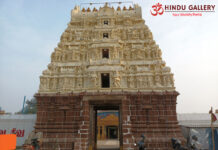
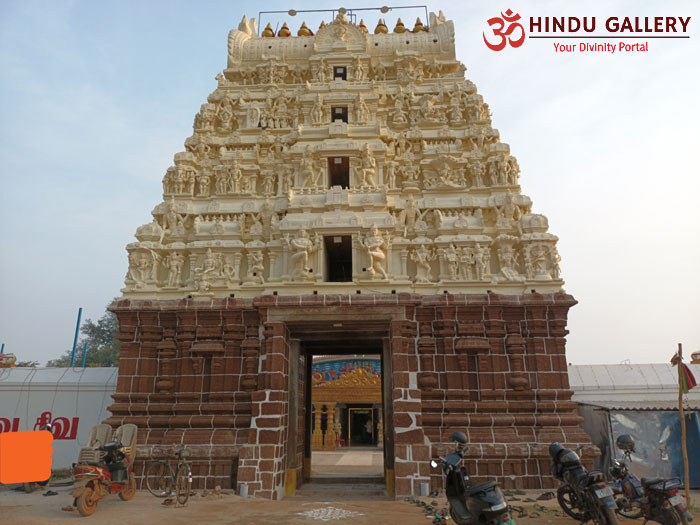
Normally, temples down south used to have gopuram tiers in odd numbers. However, in this temple, the Raja Gopuram has four tiers representing four vedas.
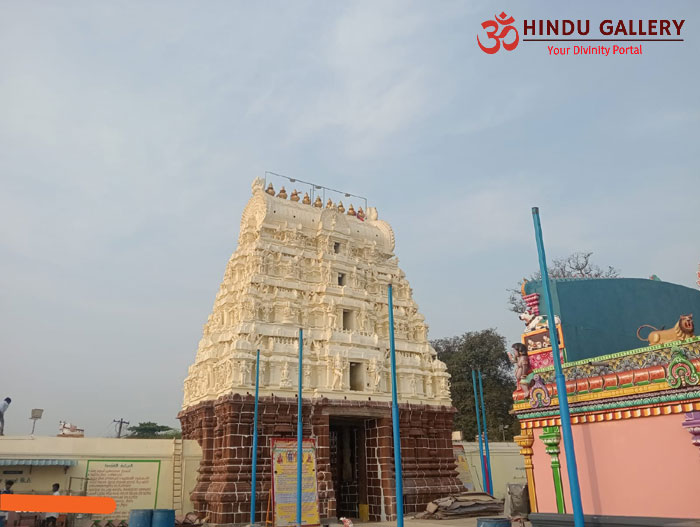
The Raja Gopuram is facing south.
Soon on entrance, we get to see the Artha mandapam which houses the main Deities. The Mandapam has pillars with sculptures.
First, we start with the perambulation of the outer prakaram.
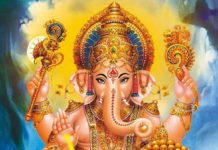
To the left of the entrance from Raja Gopuram, we get the darshan of Sri Vasthu Kubera Pillayar atop an elevated stage. We mount a few steps to reach this small sanctum. We do the parikrama of the Deity and get down.
Next to this sanctum, we have the Thiru Kalyana Mandapam where the marriage of the Deities is conducted. The celestial marriage is done during Panguni month on Utharam Star-day.
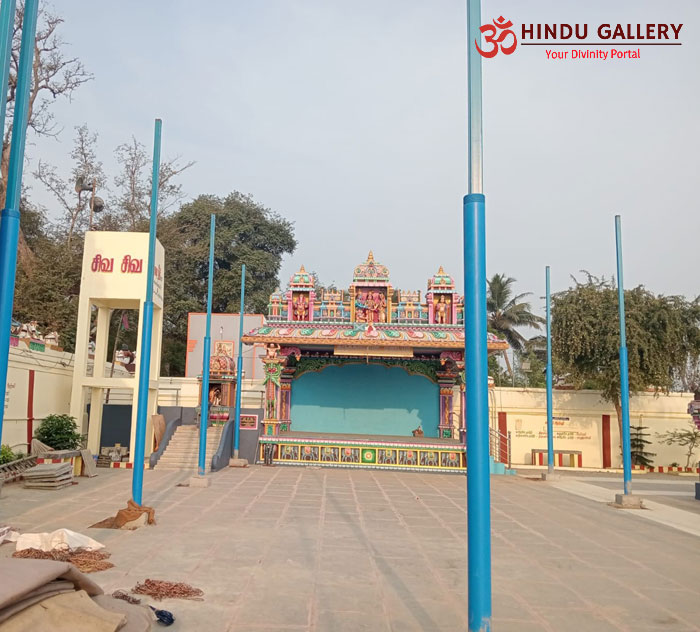
Opposite the Kalyana Mandapam, there is a separate sanctum for Sri Sakthi Mukthi Vinayakar.
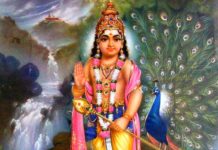
Next to this shrine, we see another sanctum for Sri Bala Murugan.
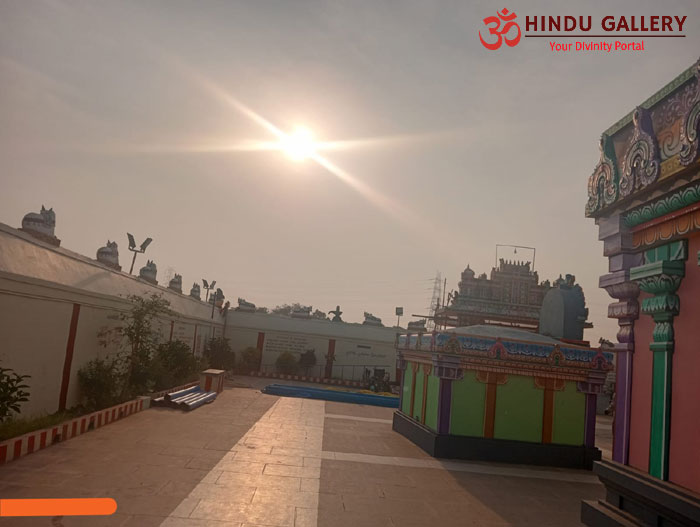
When we go around the outside of the main sanctum in our parikrama, we get to the sanctum of Sri Chandikeshwar in the eastern side.
In the eastern side of the outer wall of the main sanctum, we get to see an entrance with Sri Nandi Deva and Bali Peetam.
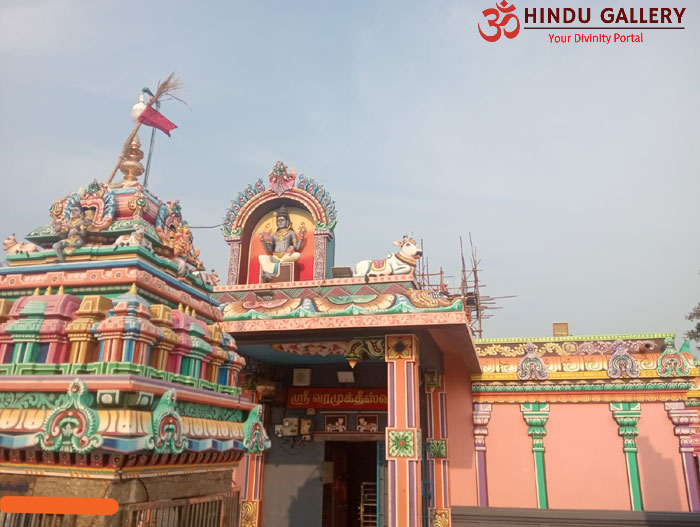
This is the entrance for Sri Eshwar sanctum. Bali-Peetam is at the back of the Nandi. There is no Dwajasthambam in this temple.
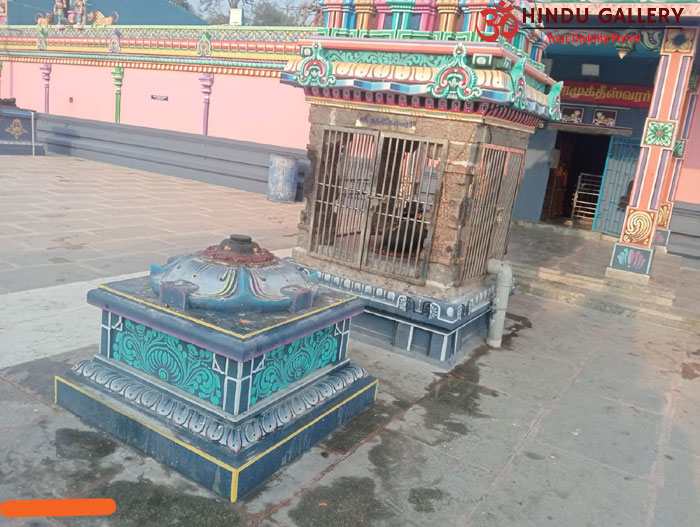
We can see a square hole in direct proportion to the Ambal sanctum. Outside this hole, the holy vahan Sri Simha is placed.
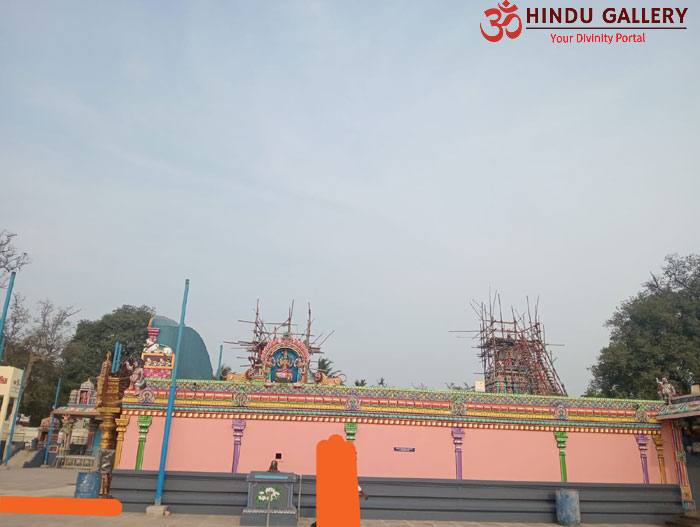
It is learnt that, on Panguni Uthiram Star-Day, the rays of the Sun fall on Sri Eshwar and Sri Ambal.
At the end of our perambulation, we get the darshan of Sri Kala Bhairav in a separate sanctum.
When we get into the Artha Mandapam to reach the main sanctum, we get the darshan of Sri Ambal who is hailed as Sri Kamakshi Devi. Sri Ambal is adorned with bangles on Adi Pooram Star-day.
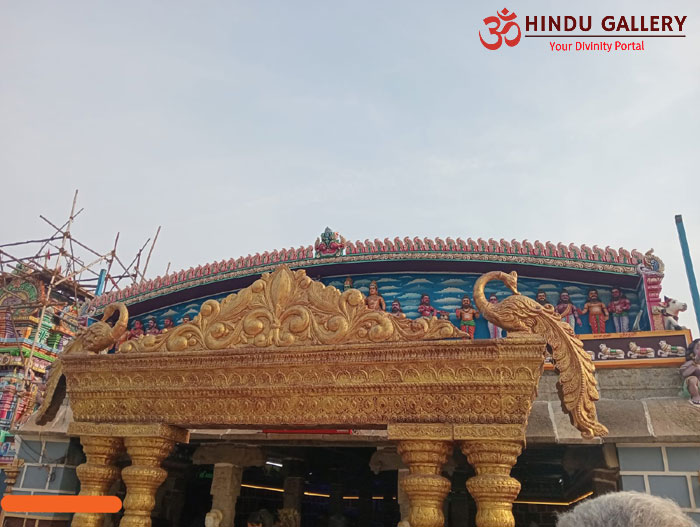
Further down the mandapam, we get to the sanctum of Sri Eshwar who is hailed as Sri Vara Muktheswar. At this sanctum, four oil lamps are lit. Of the four, one lamp’s light keeps swaying. It is believed that this swaying depicts the cosmic dance of Sri Nataraja. On Aipasi Paurnami day, Annabhishekam is done to Swamy.
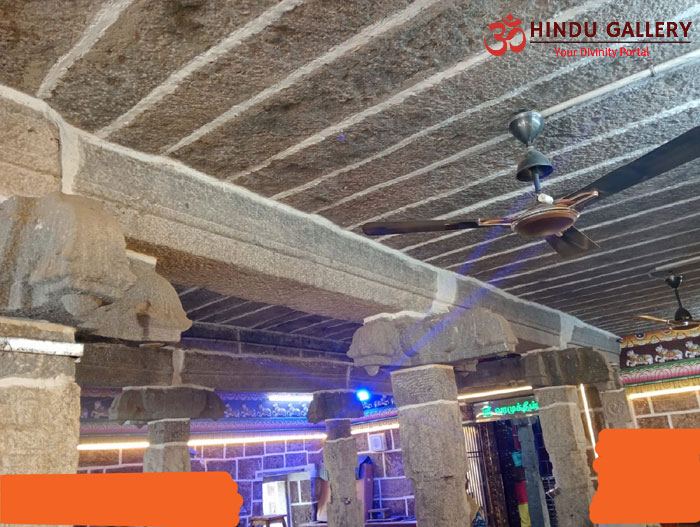
The sanctum of Sri Nataraja is in the left side of the main sanctum.
The four Saivisham Saints Sri Appar, Sri Manickawasagar, Sri Sundarar and Sri Gnana Sambandar are facing the main Deity alongwith Sri Surya and Sri Chandra inside the main sanctum.
Both Sri Vara Muktheswar and Sri Kamakshi are facing east.
In the koshtam, i.e., the outer wall of the main sanctum there are some Deities for both Swamy and for Ambal. For Swami, the Deities are Sri Selva Ganapathi, Sri Dakshina Murthy, Sri Maha Vishnu, Sri Brahma and Sri Durga Devi. For Ambal, the Deities are Sri Brahmi, Sri Sakthi Ganapathi, Sri Vaishnavi, Sri Maheswari and Sri Varahi.
The sanctums are in square shape. Both Sri Eshwar and Sri Ambal are in Kalyana Kolam. Those seeking blessings for marriage can pray to these Deities for removal of obstacles.
Interestingly, there is no sanctum for Navagrahas in this temple.
The rituals in this temple are done as per Kamika Agamam.
One could feel the good vibes in the temple premises which energizes us. At the same time, one can feel the calming of mind and soul.
The temple is open from 07.00 A.M to 12.00 Noon and from 04.00 P.M to 08.00 P.M. The timings may differ during festivals.
Makara Sankaranthi, Maha Shivrathri, Tamil New Year, Sri Vinayaka Chathurthi, Arudra Darshan and Adi Pooram are some of the festivals celebrated in this temple. Special Puja is done on Mondays, Kruthika Star-day, Ashtami days and Pradosham.
Sri Kothanda Ramar Temple
This temple is just about 500 meters from the Eshwar Temple.
Sri Ramar Temple is atop a small hillock with a few steps.
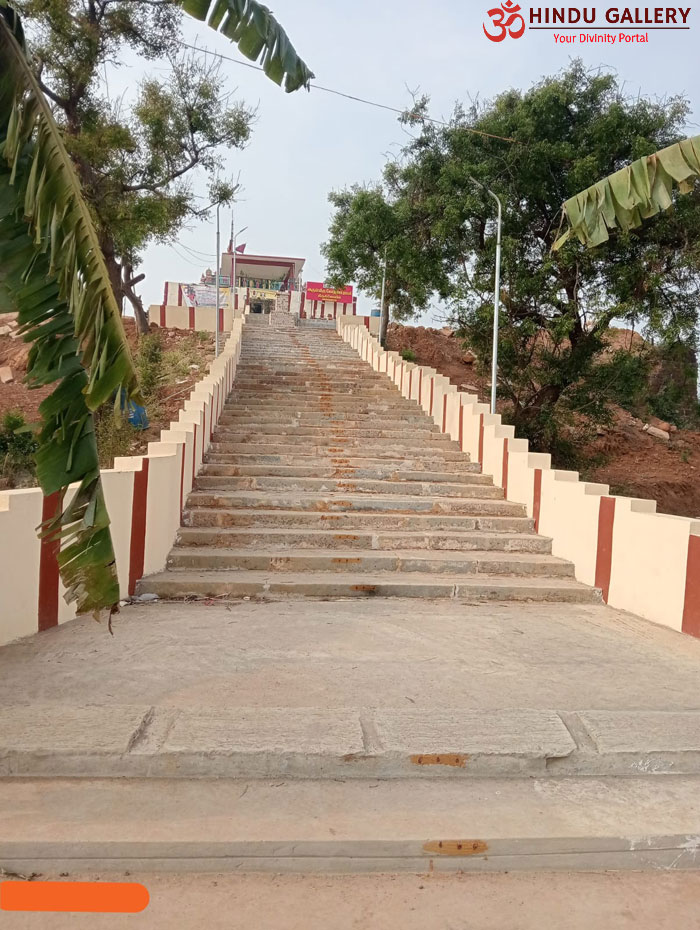
The entrance to the temple is through the open courtyard upon the stairs.
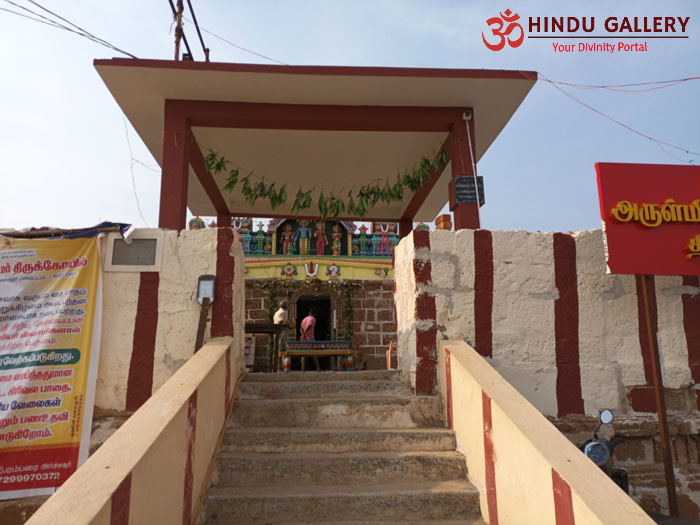
The sanctum is in the form of a Mandapam. The Mandapam has sculptured pillars.
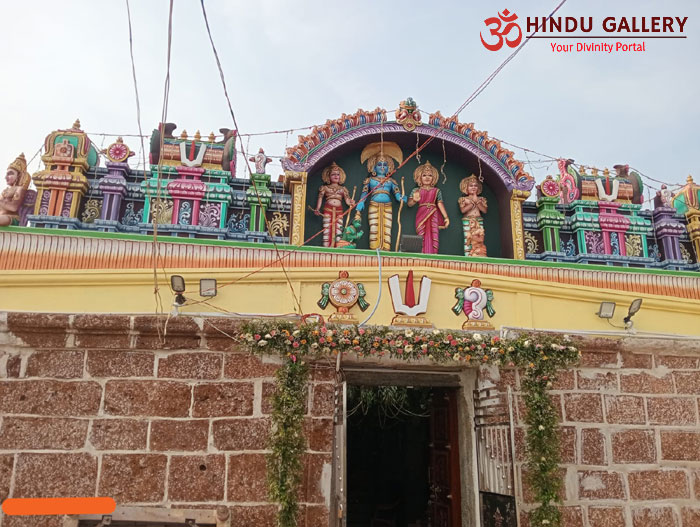
Before reaching the main sanctum, we get the darshan of Sri Lakshmi Narayana Perumal on the right side. To the left, we get the darshan of Sri Vishvak Senar, Sri Ramanujar, Sri Thirukachi Nambi, Nammalvar and Thirumazhisai Alwar.
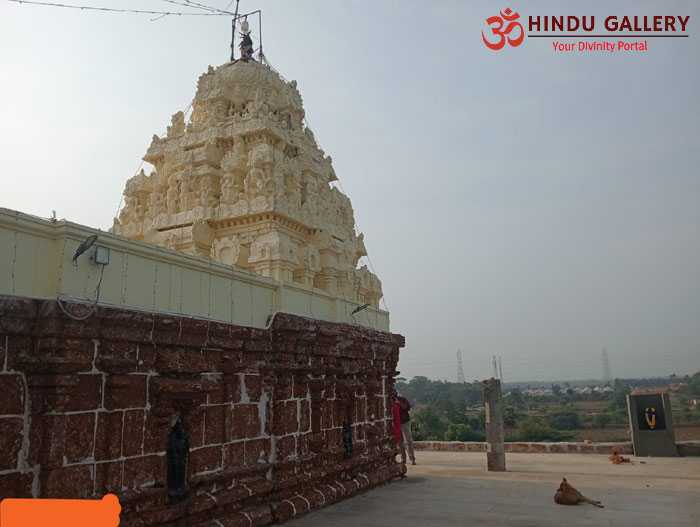
The main sanctum is on an elevation. Bhagwan Ram is sitting and He has Sri Seetha Devi on His left lap and He is protecting Her. To the right of Sri Ram, Sri Lakshman and Sri Anjaneya Swamy are in standing position.
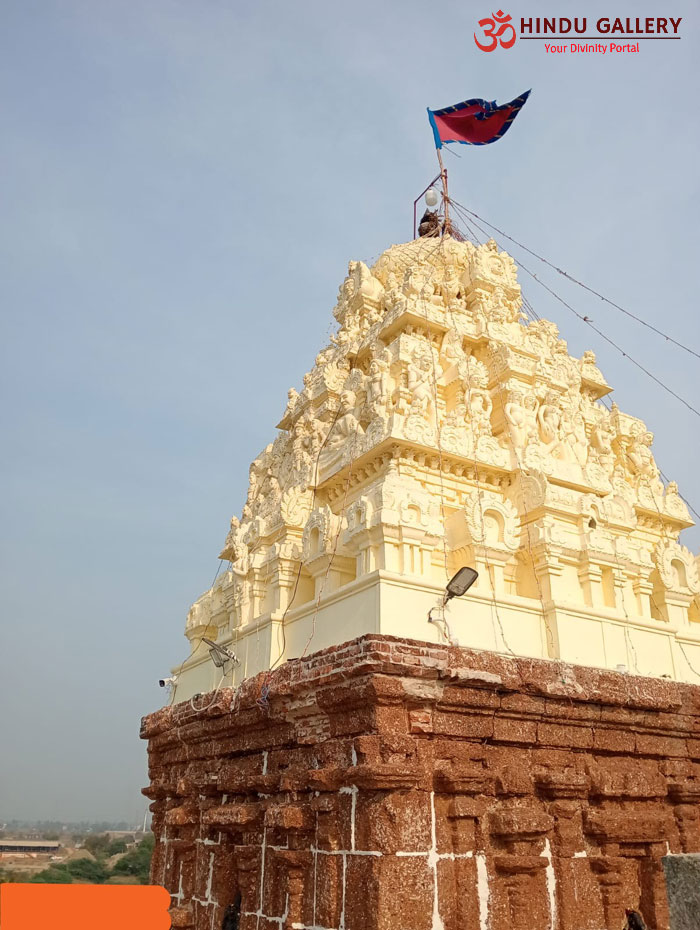
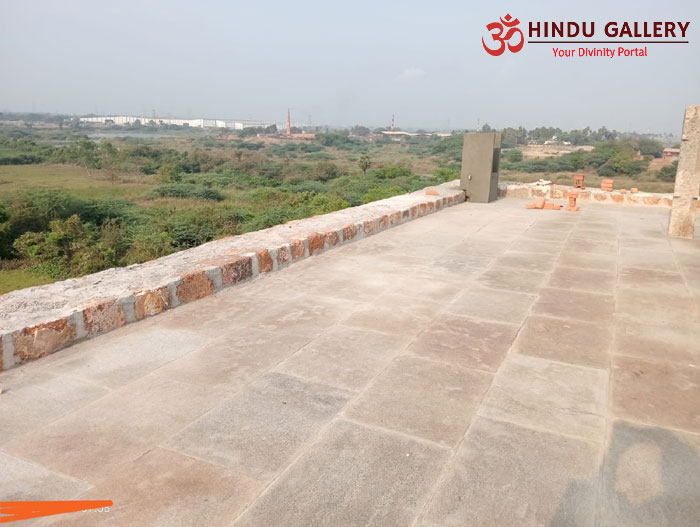
We take the perambulation of the temple on the open courtyard.
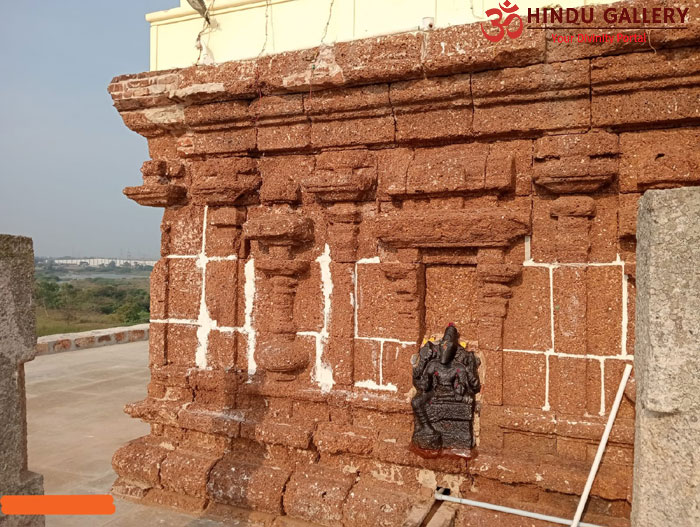
On the koshtam of the main sanctum, we get to see Sri Vinayakar, Sri Varahar, Sri Narasimhar, Sri Vishnu Murthy in sitting form and another Devi Deity.
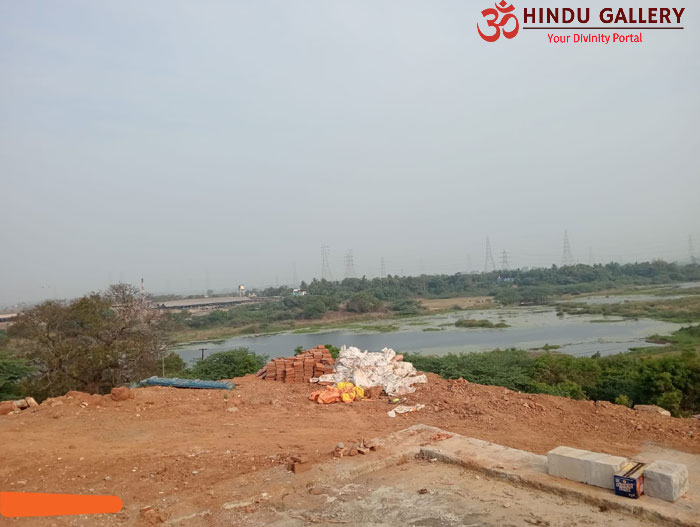
There is a separate shrine for Sri Anjaneya in the corner of the open courtyard. The river Kusasthala flows near the hillock.
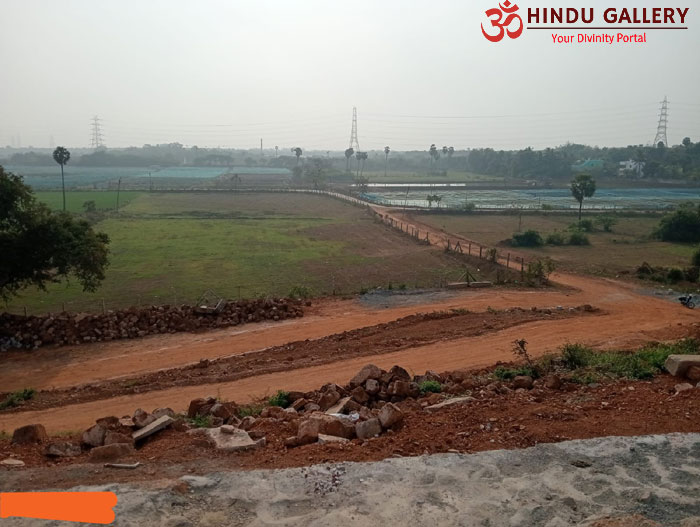
Now, in March 2026, efforts are being made to make a Girivalam, i.e., giri parikrama route around the hillock.
The temple is open from 07.00 A.M to 12.00 Noon and from 04.00 P.M to 08.00 P.M. The timings may differ during festivals.
This temple is calm, quiet and serene.
Eruma Vetti Palayam can be reached by road. Buses are available from Red Hills and Ponneri. Cabs can be booked.